
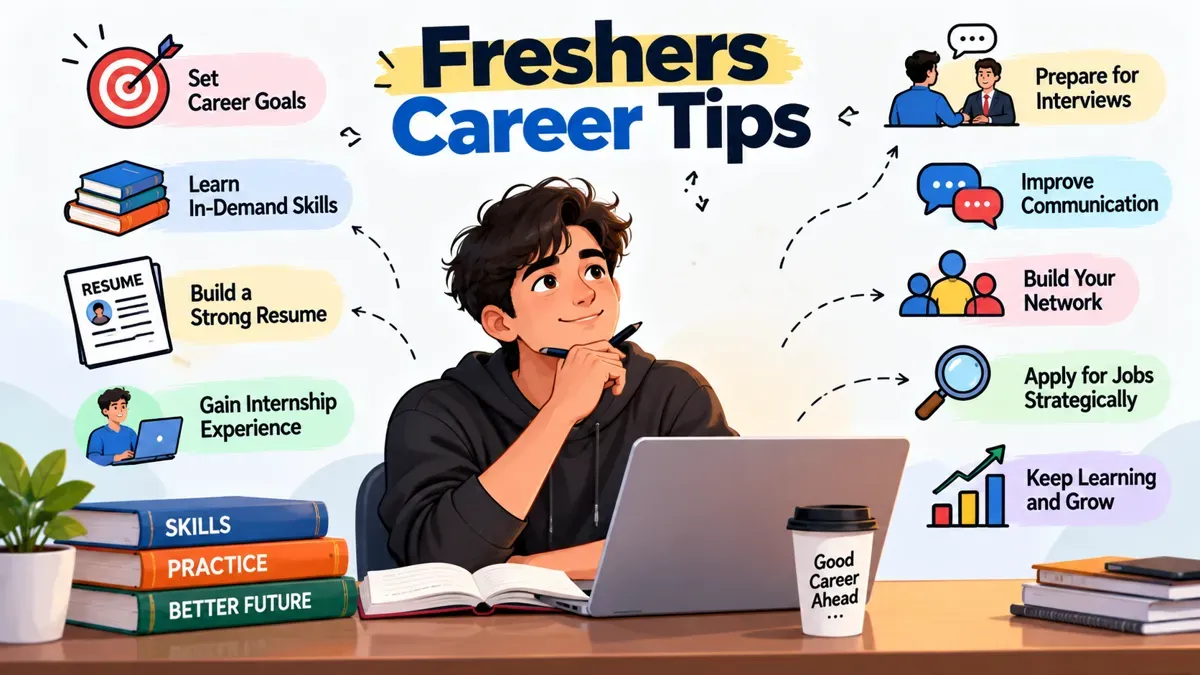
Starting your professional journey is an exciting milestone, but it can also feel confusing and challenging. Many fresh graduates wonder how to find their first job, which skills to learn, how to prepare for interviews, and what employers expect from freshers.
The transition from college to the professional world takes preparation, patience, and continuous learning. Having a degree is an important achievement, but developing practical skills, gaining experience, and building confidence can also make a significant difference in your career journey.
Whether you have recently completed your graduation or are still studying, the right career tips can help you prepare for professional opportunities.
At Vexatry Global, we believe that every fresher should have access to practical learning, career guidance, and opportunities to develop skills for the workplace.
In this blog, we will explore essential career tips for freshers to help you start your professional journey with confidence.
1. Identify Your Career Goals
Before applying for jobs, take some time to understand your interests, strengths, and career goals.
Many freshers apply for every available job without considering whether the role matches their skills or interests. Instead, explore different career options related to your educational background and personal interests.
For example, a B.Com graduate may explore accounting, finance, business development, or data analytics. A B.Tech graduate may consider software development, IT support, testing, or technical operations.
You do not need to have your entire career planned from the beginning. Start by identifying a few suitable career paths and learning about their requirements.
2. Develop In-Demand Skills
One of the most important career tips for freshers is to focus on skill development.
Employers may look for candidates who have relevant knowledge, practical abilities, communication skills, and a willingness to learn.
Depending on your chosen career, you can develop skills such as:
- Communication and professional writing
- Microsoft Excel and PowerPoint
- Data analysis and problem-solving
- Digital marketing and SEO
- Programming and web development
- Teamwork and time management
Choose skills that are relevant to your target job role. You can learn through online courses, workshops, practical assignments, and guided training programs.
Remember, learning a few relevant skills and applying them practically can be more useful than collecting multiple certificates without understanding the subject.
3. Create a Professional Resume
Your resume is often the first impression you make on a potential employer.
As a fresher, you may not have extensive work experience, but you can still create a strong resume by highlighting your education, relevant skills, academic projects, internships, and certifications.
A professional fresher resume should include:
- Contact information
- Career objective or professional summary
- Educational qualifications
- Technical and soft skills
- Academic or personal projects
- Internship experience, if applicable
- Relevant certifications
Keep your resume clear, concise, and easy to read. Customize it according to the job description whenever possible.
Avoid adding skills or experience you do not genuinely possess. Being honest about your abilities helps build credibility during interviews.
4. Gain Practical Experience Through Internships
Practical experience can help freshers understand how their academic knowledge applies to real-world work.
Internships provide opportunities to explore professional environments, complete assignments, develop workplace skills, and understand industry expectations.
For students who have not yet secured a full-time job, internships can be a useful way to gain exposure and build confidence.
Before joining an internship, check the training structure, responsibilities, duration, mentorship, fee details (if applicable), and expected learning outcomes.
A meaningful internship should provide genuine learning opportunities rather than simply a certificate.
At Vexatry Global, students can explore internship and training opportunities designed to support practical learning and professional skill development.
5. Prepare for Job Interviews
Interview preparation is essential for freshers entering the job market.
Even if you have the required qualifications, you may find it difficult to explain your skills and experiences without preparation.
Start by preparing answers to common fresher interview questions, such as:
- Tell me about yourself.
- Why should we hire you?
- What are your strengths and weaknesses?
- Why are you interested in this role?
- What are your career goals?
- What did you learn from your academic projects?
Research the company and job role before attending an interview.
Practice speaking clearly and confidently. If you do not know the answer to a question, be honest and explain how you would approach learning or solving the problem.
Every interview can be a learning experience, regardless of the outcome.
6. Build Your Communication Skills
Communication skills are valuable across almost every profession.
Freshers may need to communicate with colleagues, managers, customers, and clients. Being able to express ideas clearly can help you work more effectively in professional environments.
You can improve your communication skills by:
- Practicing spoken English or your preferred professional language
- Reading regularly
- Writing professional emails
- Participating in group discussions
- Practicing presentations
- Listening carefully to others
You do not need to speak perfect English to succeed professionally. Clear communication, confidence, and a willingness to improve are important starting points.
7. Build a Strong Professional Network
Networking can help freshers learn about career opportunities, industry trends, and professional experiences.
Start by connecting with college seniors, professors, alumni, classmates, and professionals working in your preferred field.
You can also attend career fairs, workshops, webinars, and professional events.
Maintain a professional online presence and keep your resume updated.
Networking is not just about finding a job. It is also about learning from others, sharing knowledge, and building meaningful professional relationships.
8. Apply for Jobs Strategically
Sending hundreds of applications without reviewing job requirements may not be an effective job search strategy.
Instead, focus on roles that match your qualifications, skills, and career interests.
Here are some useful job search practices for freshers:
- Use reliable job portals and company career pages.
- Read job descriptions carefully.
- Customize your resume for relevant roles.
- Track the jobs you have applied for.
- Prepare for assessments and interviews.
- Follow up professionally when appropriate.
Be cautious of fraudulent job offers. Genuine employers should provide clear information about the role, selection process, and employment terms. Avoid paying recruiters who promise guaranteed jobs.
Finding your first job may take time, so remain consistent and continue improving your skills.
9. Work on Projects That Demonstrate Your Skills
Projects can help freshers demonstrate their knowledge, especially when they have limited professional experience.
A practical project allows employers to understand how you approach problems and apply what you have learned.
For example:
- Web development students can build a responsive website.
- Digital marketing students can create an SEO or social media campaign.
- Data analytics students can analyze a sample dataset.
- Management students can prepare a business case study.
- Commerce students can create a financial analysis project.
Document your work and explain the problem, process, tools used, and outcome.
A well-explained project can give you useful talking points during interviews and help you build a professional portfolio.
10. Keep Learning and Stay Consistent
Your first job is only the beginning of your professional journey.
Industries, technologies, and workplace expectations continue to evolve. Freshers who remain open to learning can gradually improve their knowledge and adapt to new opportunities.
Set realistic learning goals, ask for feedback, and work on improving one skill at a time.
Do not compare your career progress with others. Every individual has a different educational background, financial situation, learning pace, and professional journey.
Focus on your own progress and keep taking meaningful steps toward your goals.
How Vexatry Global Can Help Freshers
Vexatry Global aims to bridge the gap between academic learning and practical skill development through internship and training initiatives.
Our focus is to help students and freshers explore professional interests, develop relevant skills, and gain exposure to practical assignments and project-based learning.
Whether you are interested in technology, digital marketing, business, or professional development, gaining relevant knowledge and practical experience can help you prepare for future opportunities.
Students can visit the Vexatry Global website to explore available internship and training programs and review their eligibility, duration, fee structure, and learning outcomes.
Frequently Asked Questions (FAQs)
1. What should freshers do to start their careers?
Freshers should identify their career interests, develop relevant skills, prepare a professional resume, gain practical experience, and apply for suitable entry-level positions.
2. How can freshers get a job without experience?
Freshers can build experience through internships, academic projects, personal projects, volunteering, and practical training. These activities can help demonstrate relevant skills to employers.
3. Which skills are important for freshers?
Communication, problem-solving, teamwork, time management, digital literacy, and role-specific technical skills can be valuable for freshers.
4. Are internships useful for freshers?
Yes. Internships can provide practical experience, workplace exposure, mentorship, and opportunities to apply academic knowledge. The value depends on the quality and structure of the internship.
5. How can freshers prepare for interviews?
Freshers can prepare by researching the company, understanding the job description, practicing common interview questions, reviewing their resume, and preparing to discuss their projects and skills.
6. Can Vexatry Global help students with career development?
Vexatry Global aims to support students through internship and training opportunities focused on skill development and practical learning. Students should review the available programs and their details on the official website.
Conclusion
Starting your career as a fresher may feel challenging, but every professional begins somewhere.
By developing relevant skills, gaining practical experience, building a strong resume, and preparing for interviews, you can take meaningful steps toward your career goals.
Do not wait until you feel completely ready to begin. Start learning, explore opportunities, work on projects, and improve with every experience.
Your first job is not the finish line. It is the beginning of your professional journey.
Explore your potential, build practical skills, and take your next career step with Vexatry Global.