
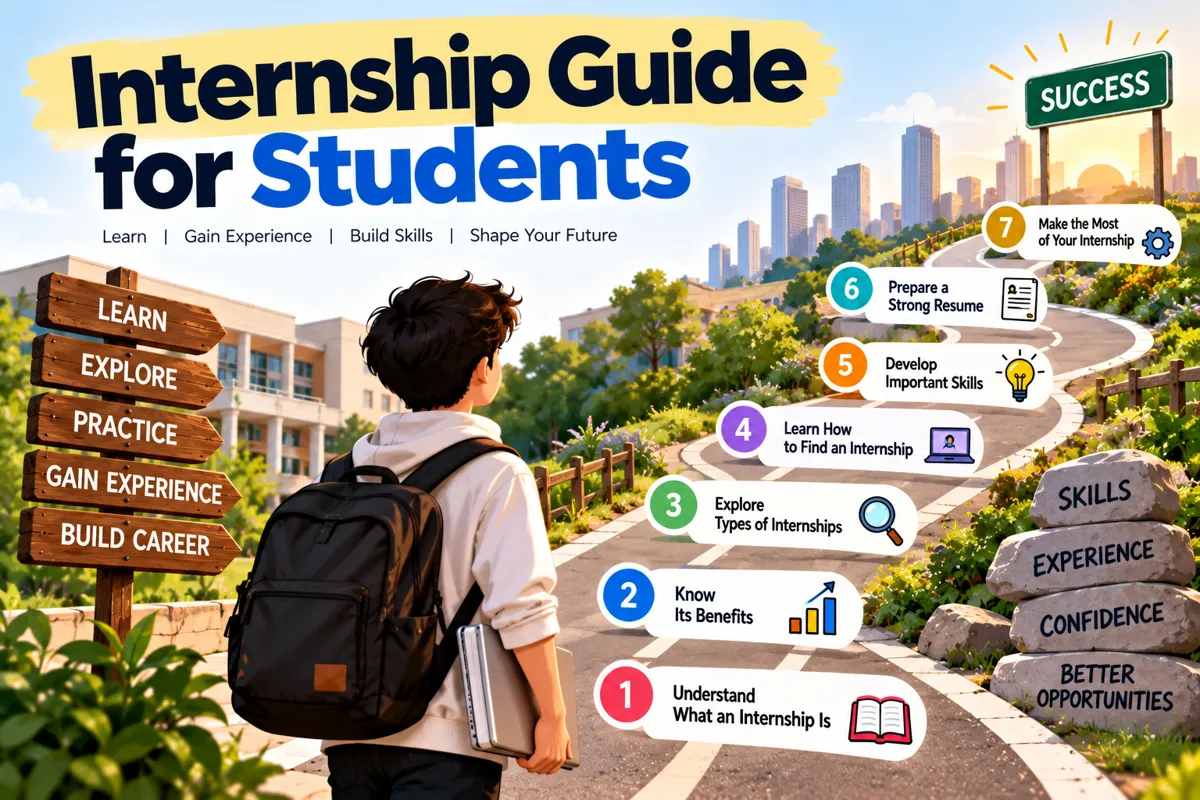
Starting your professional journey can feel confusing, especially when you have little or no work experience. Many college students want to gain practical knowledge, improve their skills, and prepare for future job opportunities but are unsure where to begin.
An internship can be a valuable step toward achieving these goals. It allows students to explore a professional field, apply their academic knowledge, and understand how workplaces operate.
Whether you are pursuing BA, B.Com, BBA, BCA, B.Tech, MBA, or another degree, an internship can help you discover your interests and prepare for professional opportunities.
However, finding the right internship requires proper planning and understanding. Students should know what internships offer, how to apply, what skills to develop, and how to choose a suitable program.
In this complete internship guide, Vexatry Global explains everything students need to know before starting their internship journey.
What Is an Internship?
An internship is a temporary learning or work experience that allows students and freshers to gain exposure to a particular industry or professional field.
Internships may involve practical assignments, project work, training sessions, teamwork, and mentorship, depending on the program.
The primary purpose of an internship is to help participants understand how their academic knowledge can be applied in professional situations.
For example, a digital marketing intern may work on SEO research, content planning, or social media activities. A web development intern may learn to build websites and work on development projects.
Internships can be offered by companies, startups, educational institutions, and other organizations.
Why Are Internships Important for Students?
Internships can help students develop practical knowledge and gain a better understanding of their chosen career path.
Here are some important benefits of internships.
1. Gain Practical Experience
College education provides theoretical knowledge, but practical experience helps students understand how concepts are applied in real-world situations.
Internships can provide opportunities to work on assignments, solve problems, and complete projects related to a particular field.
2. Develop Professional Skills
During an internship, students may develop communication, teamwork, time management, problem-solving, and technical skills.
These abilities can be useful when applying for jobs or pursuing further professional development.
3. Explore Career Opportunities
An internship allows students to explore a particular profession before committing to it as a long-term career.
For example, students interested in technology may explore web development, software testing, data analytics, or IT support through relevant learning experiences.
This exposure can help them understand their interests and make more informed career decisions.
4. Build a Strong Resume
Relevant internship experience can strengthen a fresher's resume.
Students can highlight the projects they completed, tools they used, skills they developed, and responsibilities they handled.
A resume supported by genuine practical experience can help candidates explain their abilities during interviews.
5. Improve Career Confidence
Starting a professional journey can be challenging for students who have never worked in a structured environment.
Internships can help students become familiar with professional communication, deadlines, teamwork, and workplace expectations.
This experience may help them feel more prepared when applying for entry-level positions.
Types of Internships Available for Students
Internships are available in different formats depending on the organization, industry, and learning objectives.
1. Online or Remote Internship
Remote internships allow students to participate from home using digital communication and collaboration tools.
These internships can be suitable for students who want to balance academic responsibilities with professional learning.
2. Offline Internship
Offline internships require students to work from an organization's office or designated location.
They may provide opportunities for in-person collaboration, workplace exposure, and direct interaction with mentors.
3. Hybrid Internship
Hybrid internships combine remote work with selected in-person activities.
The exact schedule depends on the organization and internship program.
4. Paid Internship
Paid internships provide a stipend or other agreed compensation for the work performed by interns.
The amount and payment terms vary depending on the organization, role, duration, and responsibilities.
5. Unpaid or Training-Based Internship
Some internships focus on learning, training, and project-based experience without providing a stipend.
Students should carefully review the program structure, learning outcomes, workload, and any applicable fees before enrolling.
A training fee, if applicable, should be clearly disclosed along with what the student receives in return.
How to Find the Right Internship
Finding an internship becomes easier when you have a clear understanding of your interests and goals.
Follow these steps to explore suitable opportunities.
Step 1: Identify Your Career Interests
Start by identifying the field you want to explore.
You may be interested in technology, business management, digital marketing, finance, human resources, or another professional area.
Choose an internship that aligns with your interests and gives you an opportunity to learn relevant skills.
Step 2: Research Internship Programs
Explore internship opportunities offered by companies, startups, colleges, and training organizations.
Review the program details, eligibility criteria, duration, responsibilities, and learning objectives.
Avoid enrolling in a program based only on promotional claims or the promise of a certificate.
Step 3: Prepare Your Resume
Create a simple and professional resume highlighting your educational qualifications, skills, academic projects, and certifications.
Even if you have no previous work experience, you can include relevant coursework, personal projects, and practical activities.
Step 4: Apply for Suitable Opportunities
Apply for internships that match your qualifications, interests, and availability.
Follow the application instructions carefully and provide accurate information about your education and skills.
Some programs may require an application form, resume, interview, or basic assessment.
Step 5: Review the Internship Details Before Joining
Before accepting an internship, understand its duration, working hours, training structure, responsibilities, supervision, fee or stipend arrangements, and certificate criteria.
Having clarity about these details can help you make an informed decision.
Essential Skills Students Should Develop During an Internship
An internship is not only about completing assignments. It is also an opportunity to develop skills that can support your future career.
Some useful skills include:
- Communication and professional writing
- Teamwork and collaboration
- Time management
- Problem-solving
- Digital literacy
- Critical thinking
- Adaptability
- Technical skills related to your chosen field
Students should focus on applying these skills through practical tasks and learning activities.
How to Make the Most of Your Internship
Getting an internship is only the beginning. The way you approach the learning experience can influence how much you gain from it.
Set Clear Learning Goals
Identify what you want to learn before your internship begins.
Your goals may include learning a new tool, completing a project, improving communication skills, or understanding a particular industry.
Ask Questions and Seek Feedback
Do not hesitate to ask questions when you encounter difficulties.
Feedback from trainers, mentors, or supervisors can help you identify areas for improvement and understand how to approach tasks more effectively.
Complete Assignments Seriously
Treat internship assignments as opportunities to develop practical knowledge.
Follow instructions, meet deadlines, and communicate if you face challenges.
Maintain a Record of Your Work
Keep track of the projects, assignments, tools, and skills you work with during the internship.
This record can help you update your resume and explain your experience during future interviews.
Build Professional Relationships
Interact respectfully with mentors, trainers, and fellow interns.
Professional relationships can provide opportunities to learn, collaborate, and gain useful career insights.
Common Internship Mistakes Students Should Avoid
Students should be careful while selecting and participating in internship programs.
Here are some common mistakes to avoid:
- Joining an internship without understanding its learning objectives.
- Choosing a program only because it promises a certificate.
- Ignoring the fee structure or stipend terms.
- Applying without checking eligibility criteria.
- Failing to complete assigned tasks.
- Not asking for feedback or guidance.
- Adding false internship experience to a resume.
- Assuming that an internship guarantees a permanent job.
A genuine internship should provide clear expectations and a meaningful learning experience.
How Vexatry Global Supports Student Internships
Vexatry Global aims to help students bridge the gap between academic learning and practical skill development through internship and training initiatives.
Our focus is on providing students with opportunities to explore professional interests, develop relevant skills, and gain exposure to practical assignments and project-based learning.
Students interested in technology, digital marketing, business, and professional development can explore relevant programs based on their educational background and career goals.
Before enrolling, students should review the available internship details, including eligibility, duration, learning structure, fee or stipend terms, and certificate requirements.
To learn more about Vexatry Global and explore available opportunities, visit our official website: https://vexatryglobal.com/
Frequently Asked Questions (FAQs)
1. Who can apply for an internship?
College students, recent graduates, and freshers may apply for internships depending on the eligibility criteria of the program.
2. Can students do internships while studying?
Yes. Many internships are designed to accommodate students, including remote or part-time opportunities. Students should check the schedule and workload before applying.
3. Do internships require previous work experience?
Not always. Many beginner-level internships are designed for students with little or no professional experience.
4. Are internships available for arts and commerce students?
Yes. Arts and commerce students can explore internships in digital marketing, business development, content writing, human resources, finance, and other relevant fields.
5. Do internships guarantee a job?
No. An internship does not guarantee employment. However, relevant experience and practical skills may help students prepare for future job opportunities.
6. Should students pay for an internship?
Some training-based internship programs charge a fee, while many employer-based internships are free or paid. Students should carefully evaluate the program, understand the fee structure, and confirm the learning outcomes before making a payment.
7. Is an internship certificate important?
An internship certificate can document participation or completion of a program. However, practical skills, completed projects, and genuine experience are also important when presenting your internship to employers.
Conclusion
An internship can be an important step in a student's journey from academic learning to professional development.
It provides an opportunity to explore career interests, gain practical experience, develop relevant skills, and understand workplace expectations.
The key is to choose an internship that matches your goals and offers meaningful learning opportunities.
Start by identifying your interests, researching suitable programs, preparing your resume, and applying for opportunities that align with your career plans.
With consistent learning, practical experience, and the right guidance, you can take confident steps toward your professional future.
Explore your potential with Vexatry Global. Learn new skills, gain practical experience, and take the next step in your career journey.