
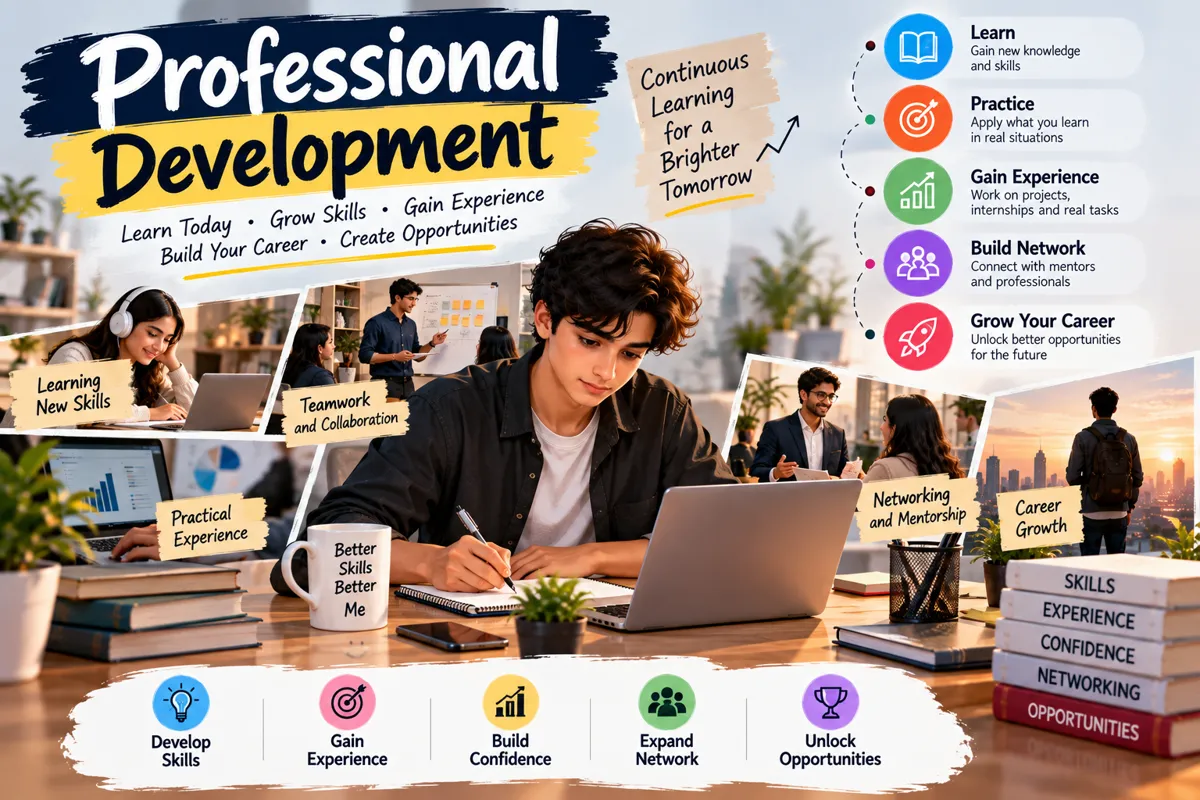
Starting a career is not only about getting a degree or finding your first job. It is also about continuously learning, improving your abilities, gaining practical experience, and understanding how to work effectively in a professional environment.
This process is known as professional development.
Professional development helps individuals improve the skills and knowledge they need to perform better in their careers. It can include technical learning, communication, leadership, teamwork, time management, industry knowledge, and practical experience.
For students and freshers, professional development can be especially useful because it helps bridge the gap between academic learning and workplace expectations.
At Vexatry Global, we believe that students should have opportunities to learn practical skills, explore career paths, and prepare themselves for professional environments.
In this guide, we will understand what professional development means, why it is important, which skills students should develop, and how to create a simple professional development plan.
1. What Is Professional Development?
Professional development is the process of improving your knowledge, skills, experience, and professional abilities throughout your career.
It can happen through many activities, including:
- Training programs
- Internships
- Online courses
- Workshops
- Certifications
- Projects
- Mentorship
- Networking
- Practical work experience
- Self-learning
Professional development does not stop after getting a job. Professionals continue learning as technologies, industries, and job requirements change.
For students and freshers, professional development can begin with understanding their interests and developing the basic skills required for their preferred career path.
2. Why Is Professional Development Important?
Professional development can help individuals become more prepared for academic, professional, and career-related opportunities.
Builds Career Readiness
Students may have theoretical knowledge but may not always know how that knowledge is applied in a workplace.
Professional development activities such as internships and projects can provide practical exposure and help students understand professional responsibilities.
Improves Skills
Professional development encourages continuous learning.
Depending on your career goals, you can improve technical skills, communication, leadership, analytical thinking, digital skills, or other abilities.
Builds Confidence
Learning and practicing new skills can make students more comfortable handling professional situations.
For example, completing a project can help you explain your work during an interview, while participating in presentations can improve communication confidence.
Helps You Adapt
Workplaces and technologies change over time. Continuous learning helps professionals stay open to new tools, processes, and responsibilities.
Supports Long-Term Growth
Professional development is not only about getting your first job. It can also help you identify areas for improvement and prepare for future responsibilities.
3. Important Areas of Professional Development
Professional development includes several areas. You do not need to master everything at once. Focus on the areas that are relevant to your career goals.
A. Technical Skills
Technical skills are related to a specific profession or industry.
For example:
- Programming
- Data analysis
- Web development
- Excel
- SQL
- Digital marketing
- Graphic design
- Networking
- Project management tools
Choose technical skills according to the type of career you want to pursue.
B. Communication Skills
Communication is important in almost every professional environment.
Develop skills such as:
- Speaking clearly
- Active listening
- Professional writing
- Email communication
- Presentation skills
- Group discussions
- Professional conversations
Being able to explain your ideas clearly can help you work effectively with colleagues, clients, and managers.
C. Time Management
Managing time effectively helps you complete tasks within deadlines and organize your workload.
Students can start developing time management by:
- Creating daily task lists
- Setting priorities
- Breaking large tasks into smaller activities
- Avoiding unnecessary distractions
- Setting realistic deadlines
Good time management is a habit that can be developed through regular practice.
D. Teamwork
Most professional environments involve working with other people.
Teamwork includes:
- Sharing responsibilities
- Listening to others
- Supporting team members
- Respecting different ideas
- Communicating clearly
- Solving problems together
College projects, internships, volunteering, and group activities can provide opportunities to practice teamwork.
E. Problem-Solving
Professionals often need to deal with unexpected situations and find practical solutions.
Students can improve problem-solving by working on case studies, practical projects, puzzles, assignments, and real-world scenarios.
Instead of immediately looking for an answer, try to understand the problem, identify possible causes, consider different solutions, and evaluate the result.
F. Leadership
Leadership is not limited to managers.
Students can develop leadership skills by taking responsibility for projects, coordinating group activities, helping teammates, and making thoughtful decisions.
Leadership also involves accountability, communication, and the ability to work with others.
4. How Students Can Start Professional Development
Professional development does not require you to wait until graduation.
You can start while studying.
Step 1: Understand Your Career Interests
Think about the type of work you enjoy.
You may be interested in technology, business, management, marketing, finance, education, customer service, design, or another field.
You do not need to have a perfect career plan immediately. Start exploring areas that interest you.
Step 2: Identify Skill Gaps
Once you have identified a career direction, compare your current skills with the skills commonly required for that field.
For example, if you want to become a Business Analyst, you may need to develop skills such as Excel, basic SQL, analytical thinking, documentation, and communication.
Identifying skill gaps gives you a clearer learning direction.
Step 3: Create Learning Goals
Set specific and realistic goals.
Instead of saying:
"I want to improve my skills."
Set a specific goal such as:
"I will learn basic Excel formulas and practice them for 30 minutes every day for the next two weeks."
Specific goals are easier to follow and measure.
Step 4: Take Relevant Courses
Online courses, workshops, and training programs can help you learn new concepts.
Choose courses that match your career goals rather than collecting certificates without developing practical knowledge.
After completing a course, try to apply what you learned through a project or practical activity.
Step 5: Gain Practical Experience
Practical experience can help you understand how skills are used outside the classroom.
You can gain experience through:
- Internships
- College projects
- Volunteer work
- Freelance assignments
- Personal projects
- Student organizations
- Practical training
Keep records of meaningful projects and experiences because they can later be useful when preparing your resume.
5. Role of Internships in Professional Development
Internships can help students experience professional environments before starting a full-time career.
During an internship, students may learn how to:
- Follow professional processes
- Work with a team
- Complete assigned tasks
- Communicate with colleagues
- Manage deadlines
- Apply technical knowledge
- Understand workplace expectations
The learning experience depends on the internship, responsibilities, guidance, and level of practical involvement.
Students should look for opportunities where they can learn meaningful skills and work on relevant activities.
6. Build a Professional Development Plan
A professional development plan can help you organize your learning and career goals.
A simple plan can include four parts:
Current Skills
Write down the skills you already have.
For example:
- Basic Excel
- Communication
- Presentation
- Computer fundamentals
Skills to Improve
Identify areas where you need more practice.
For example:
- Advanced Excel
- SQL
- Public speaking
- Data analysis
Learning Activities
Decide how you will develop these skills.
Examples include:
- Online courses
- Practice exercises
- Projects
- Workshops
- Internships
- Mentorship
Target Timeline
Set a realistic timeline for each goal.
For example:
Month 1: Learn Excel fundamentals
Month 2: Complete an Excel project
Month 3: Start learning SQL
Month 4: Build a small data project
Your plan can change as your interests and career goals develop.
7. Professional Development for Different Career Paths
Different careers require different combinations of skills.
| Career Path | Professional Development Areas |
|---|---|
| Business Analyst | Excel, SQL, documentation, communication, analytical thinking |
| Data Analyst | Excel, SQL, data visualization, statistics, reporting |
| Web Developer | Programming, web technologies, Git, projects, problem-solving |
| Digital Marketing | SEO, content, analytics, social media, communication |
| IT Support | Troubleshooting, networking, operating systems, customer handling |
| Customer Service | Communication, active listening, problem-solving, CRM tools |
| Management | Leadership, teamwork, decision-making, communication |
Use this as a starting point and review current job descriptions to understand the skills commonly expected for your chosen career.
8. Build a Professional Portfolio
A portfolio can help demonstrate what you can actually do.
Depending on your career, your portfolio can include:
- Academic projects
- Internship projects
- Websites
- Data reports
- Presentations
- Marketing campaigns
- Designs
- Articles
- Certifications
- Case studies
For example, a web development student can create a personal website, while a data-focused student can prepare a sample dashboard or analysis project.
A portfolio gives you something practical to discuss during interviews.
9. Networking and Professional Relationships
Professional development is also about learning from other people.
Students can connect with:
- Teachers
- Mentors
- Industry professionals
- Alumni
- Internship supervisors
- Professional communities
Networking does not mean asking everyone for a job. It can also involve learning about careers, asking meaningful questions, attending professional events, and staying connected with people in your field.
Maintain professional communication and respect people's time.
10. Common Professional Development Mistakes
Avoiding common mistakes can make your development journey more effective.
Learning Without a Goal
Taking random courses without knowing why you are learning them can make it difficult to stay focused.
Collecting Too Many Certificates
Certificates can be useful, but practical understanding is equally important.
Focus on what you can apply and explain.
Ignoring Soft Skills
Technical skills are valuable, but communication, teamwork, time management, and adaptability are also important in professional environments.
Avoiding Practical Experience
Try to apply what you learn through projects, internships, or practical assignments.
Not Asking for Feedback
Feedback can help you identify areas that you may not notice yourself.
Ask teachers, mentors, colleagues, or peers for constructive feedback.
Giving Up Too Quickly
Professional development takes time. Some skills require repeated practice before you become comfortable using them.
Focus on steady improvement rather than immediate perfection.
11. How Vexatry Global Supports Professional Development
At Vexatry Global, we believe professional development should begin early.
Our training and internship initiatives are designed to help students and freshers explore career opportunities, develop practical skills, and understand professional expectations.
Through structured learning, practical activities, internships, and career-focused initiatives, learners can work on technical and professional abilities that support their career journey.
Whether you are still studying, preparing for your first job, or exploring a new career direction, continuous learning can help you become more prepared for future opportunities.
Explore Vexatry Global to learn more about our training, internship, and career development initiatives.
Frequently Asked Questions (FAQs)
1. What is professional development in simple words?
Professional development is the process of continuously improving the knowledge, skills, experience, and abilities needed for your career.
2. Why is professional development important for students?
It helps students develop practical skills, understand workplace expectations, gain experience, and prepare for future career opportunities.
3. How can freshers improve professionally?
Freshers can improve through internships, courses, projects, communication practice, mentorship, networking, and regular skill development.
4. Is professional development only for working professionals?
No. Students can start professional development before getting their first job by developing skills, gaining practical experience, and exploring career options.
5. What skills are important for professional development?
Important skills can include communication, teamwork, time management, problem-solving, digital skills, technical knowledge, adaptability, and leadership.
6. How can I create a professional development plan?
Identify your career goal, assess your current skills, find skill gaps, choose learning activities, and set realistic timelines for improvement.
7. Can internships help with professional development?
Yes. Internships can provide practical exposure and opportunities to develop workplace skills, understand professional processes, and apply academic knowledge.
Conclusion
Professional development is a continuous journey rather than a one-time activity. It helps students and freshers build skills, gain practical experience, improve confidence, and prepare for changing career requirements.
You do not need to develop every skill at once. Start by identifying your career interests, choose relevant skills, create practical learning goals, and keep improving through projects, training, internships, and feedback.
Your professional journey begins with the skills and habits you develop today.
Learn continuously. Build professionally. Grow with Vexatry Global.