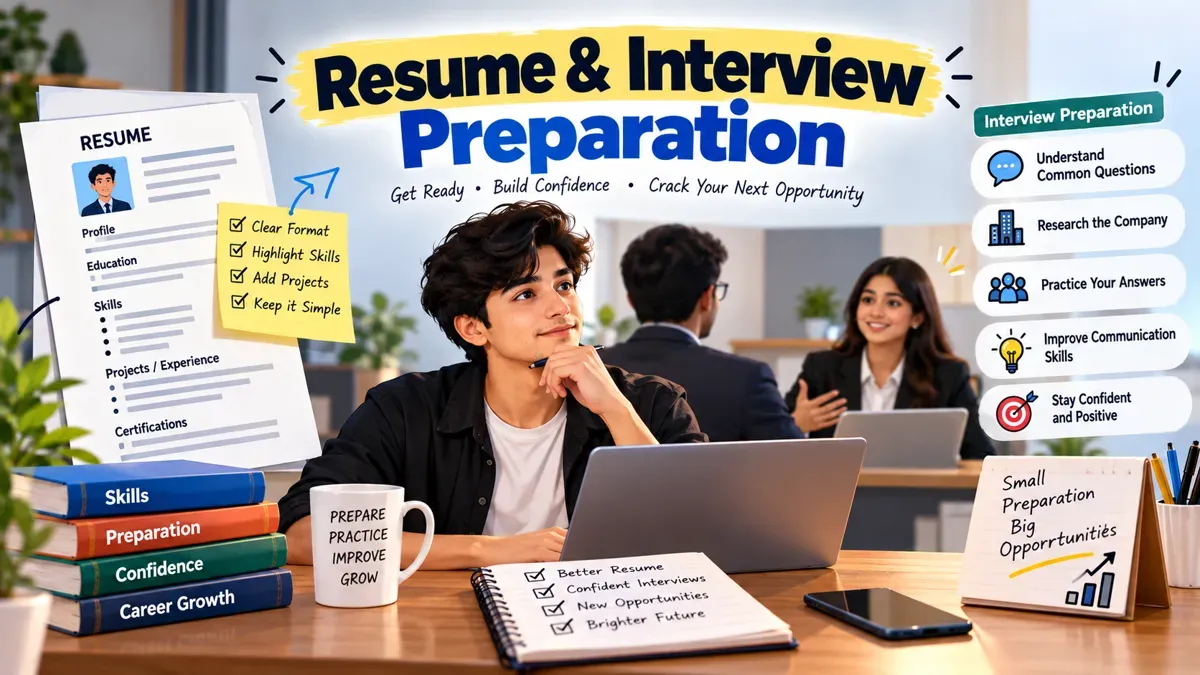
Getting your first job is an important milestone. For students and freshers, the job search process can sometimes feel confusing. You may have the right education and skills, but presenting yourself professionally is equally important.
Two important steps in starting your career are resume preparation and interview preparation. A well-written resume helps employers understand your qualifications, while good interview preparation helps you explain your skills, experience, and career goals with confidence.
At Vexatry Global, we believe that career preparation should be simple, practical, and accessible to every student. In this guide, you will learn how to prepare a professional resume and get ready for job interviews.
1. What Is a Resume?
A resume is a professional document that highlights your education, skills, experience, projects, and achievements. It gives recruiters a quick overview of your qualifications and helps them decide whether you are suitable for a particular job.
For freshers, a resume is especially important because it introduces their potential, even if they do not have full-time work experience.
What Should a Fresher's Resume Include?
A simple and professional fresher resume should include:
- Full name and contact details
- Professional summary or career objective
- Educational qualifications
- Technical and soft skills
- Internship or work experience, if applicable
- Academic or personal projects
- Certifications and achievements, if relevant
Keep your resume clear, accurate, and easy to read. For most freshers, a one-page resume is a practical starting point.
2. How to Create a Professional Resume
Creating a resume does not have to be complicated. Follow these simple steps to prepare a resume that presents your qualifications effectively.
Choose a Simple Resume Format
Use a clean layout with clear headings, readable fonts, and consistent spacing. Avoid unnecessary graphics, multiple font styles, or overly complicated designs.
A simple format helps recruiters quickly find the information they need.
Write a Strong Professional Summary
Your professional summary should briefly explain your educational background, key skills, and career interests.
Example for a fresher:
"Motivated and detail-oriented graduate with strong communication, problem-solving, and computer skills. Eager to apply knowledge, learn new technologies, and contribute to a professional team."
Customize your summary according to the job role you are applying for.
Highlight Your Skills
Include skills that are relevant to the job description. These may include technical skills, communication, teamwork, time management, or problem-solving.
For example:
- MS Excel and PowerPoint
- Basic SQL or Python
- Communication skills
- Teamwork and collaboration
- Analytical thinking
Only mention skills you can confidently explain or demonstrate during an interview.
Add Projects and Internships
If you do not have full-time work experience, academic projects, internships, and practical training can help demonstrate your abilities.
Explain what the project was about, what your role involved, and which tools or skills you used.
Avoid adding false experience or qualifications. Recruiters may ask questions about anything mentioned in your resume.
Customize Your Resume for Each Job
Read the job description carefully before applying. Highlight relevant skills and experiences that match the role.
For example, a resume for a Business Analyst position may emphasize Excel, SQL, analytical thinking, and project experience, while a customer service resume may highlight communication and problem-solving skills.
3. What Is Interview Preparation?
Interview preparation means getting ready to answer questions about your education, skills, experience, and suitability for a job.
An interview is also an opportunity for you to understand the company, job responsibilities, and work environment.
Preparing in advance can help reduce nervousness and make it easier to communicate your thoughts clearly.
4. How to Prepare for a Job Interview
Research the Company
Before attending an interview, learn about the company's services, products, work culture, and the role you have applied for.
Visit the company's official website and read the job description carefully.
This preparation helps you understand what the employer is looking for and allows you to ask relevant questions.
Practice Common Interview Questions
Many entry-level interviews include questions about your background, strengths, career goals, and interest in the job.
Here are some common questions freshers should practice:
Q1. Tell me about yourself.
Prepare a short introduction covering your education, relevant skills, projects or experience, and career interests.
Q2. Why should we hire you?
Explain how your skills, willingness to learn, and attitude can contribute to the role. Support your answer with relevant examples.
Q3. What are your strengths?
Choose two or three genuine strengths and explain how you have demonstrated them in college, projects, internships, or other experiences.
Q4. What are your career goals?
Share realistic goals that connect with the role and explain how you want to develop professionally.
Q5. Why do you want to join our company?
Discuss what interests you about the company, its work, or the opportunity to learn and contribute in the position.
Practice your answers in your own words instead of memorizing them word for word.
5. Improve Your Communication Skills
Communication plays an important role in interviews. You do not need to use complicated English or speak with a particular accent to communicate effectively.
Focus on expressing your ideas clearly and confidently.
Here are a few ways to improve your communication skills:
- Practice speaking in English or your preferred interview language.
- Read aloud for a few minutes every day.
- Record your answers and listen to them.
- Practice mock interviews with friends or mentors.
- Maintain a natural speaking pace.
- Listen carefully before answering questions.
Good communication is not only about speaking. Listening, understanding questions, and responding appropriately are equally important.
6. Prepare for Technical and HR Interviews
Depending on the job role, you may face an HR interview, a technical interview, or multiple interview rounds.
HR Interview Preparation
HR interviews often focus on your personality, career goals, communication skills, and workplace expectations.
Prepare to discuss your background, strengths, areas for improvement, and reasons for applying.
Be honest and professional when discussing your experience and expectations.
Technical Interview Preparation
For technical roles, revise the fundamentals related to the job.
For example:
- Data Analyst: Excel, SQL, data interpretation, and basic statistics
- Web Developer: HTML, CSS, JavaScript, and project fundamentals
- Business Analyst: Requirements gathering, documentation, Excel, and basic SQL
- IT Support: Troubleshooting, operating systems, networking basics, and customer handling
You should also be prepared to explain the projects and skills listed on your resume.
7. Common Resume and Interview Mistakes to Avoid
Even qualified candidates can struggle if they are not prepared. Avoid these common mistakes:
- Submitting the same resume for every job without reviewing the job description
- Adding incorrect or exaggerated information
- Including spelling and grammatical errors
- Using an unprofessional email address
- Arriving late for an interview
- Giving memorized answers without understanding them
- Speaking negatively about previous employers or colleagues
- Failing to research the company
- Not asking questions when given the opportunity
Review your resume before every application and prepare for the specific role.
8. Resume and Interview Preparation Checklist
Use this checklist before applying for a job or attending an interview.
| Resume Checklist | Interview Checklist |
|---|---|
| Contact details are correct | Company has been researched |
| Resume is clear and updated | Job description has been reviewed |
| Skills match the job role | Common questions have been practiced |
| Projects are explained properly | Resume details have been revised |
| Spelling and grammar are checked | Interview time and location are confirmed |
| Resume is saved as a PDF | Professional attire is ready |
Completing these steps can help you feel more organized and prepared.
9. How Vexatry Global Supports Students and Freshers
At Vexatry Global, we focus on helping students and freshers develop practical knowledge and workplace skills.
Our training and internship initiatives are designed to help learners understand professional expectations, improve their skills, and gain exposure to practical learning opportunities.
Through structured learning and career-focused guidance, students can work toward becoming more confident and prepared for future opportunities.
Explore Vexatry Global to learn more about our training, internship, and career development initiatives.
Frequently Asked Questions (FAQs)
1. How can a fresher create a good resume?
A fresher can create a good resume by including accurate educational details, relevant skills, projects, internships, and certifications. Use a simple format and customize the resume according to the job role.
2. How long should a fresher's resume be?
For most freshers, a one-page resume is a practical choice. Focus on relevant information rather than adding unnecessary details.
3. How can I prepare for my first job interview?
Research the company, understand the job description, practice common interview questions, revise your resume, and prepare a short self-introduction.
4. What are the most common interview questions for freshers?
Common questions include "Tell me about yourself," "Why should we hire you?", "What are your strengths?", and "Why do you want to join our company?"
5. Is work experience necessary for a fresher's resume?
No. Freshers can highlight academic projects, internships, certifications, practical training, and relevant skills to demonstrate their potential.
6. How can I improve my interview confidence?
Practice mock interviews, prepare examples from your experience, research the role, and focus on clear communication. Confidence generally improves with preparation and practice.
Conclusion
Resume and interview preparation are important steps in building a successful career. A professional resume helps you present your qualifications, while interview preparation helps you communicate your abilities and career goals effectively.
As a student or fresher, you do not need to know everything before applying for your first job. Focus on learning, improving your skills, and preparing honestly for each opportunity.
Start with a clear resume, practice your interview answers, and keep improving with every experience.
Build your skills. Prepare with confidence. Take the next step in your career with Vexatry Global.