
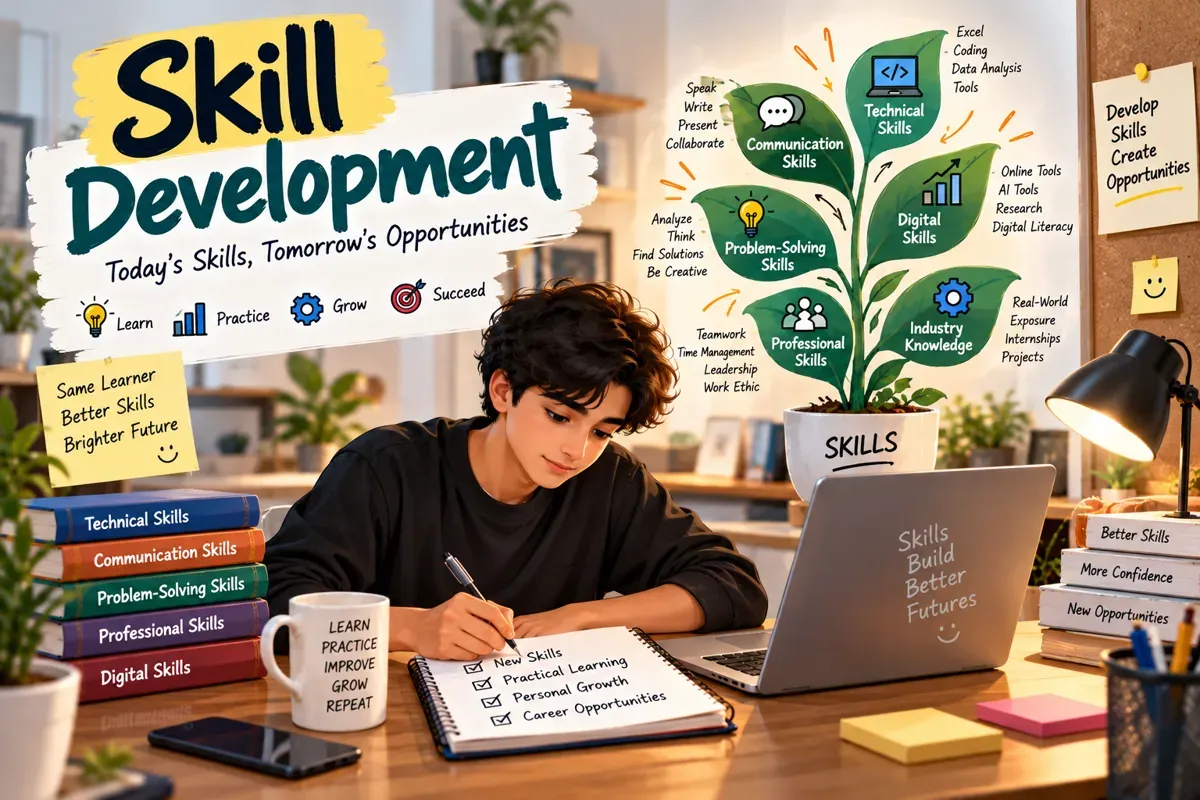
In today's competitive world, having a degree is important, but developing the right skills is equally valuable. Students and freshers need more than academic knowledge to prepare for professional life. They also need practical abilities, communication skills, problem-solving skills, and the confidence to apply what they have learned.
This is where skill development plays an important role.
Skill development helps individuals improve their abilities, learn new things, and prepare for different career opportunities. Whether you are a college student, a recent graduate, or someone planning to start a new career, learning useful skills can help you move forward.
At Vexatry Global, we believe that continuous learning and practical skill development can help students become more confident and career-ready.
In this blog, we will explore what skill development is, why it matters, which skills students should focus on, and how to improve them.
1. What Is Skill Development?
Skill development is the process of learning, improving, and practicing abilities that help you perform tasks effectively.
These skills can be related to technology, communication, business, creativity, or everyday professional activities.
For example, learning Excel, improving English communication, understanding digital marketing, or developing problem-solving abilities are all parts of skill development.
Skill development is not limited to classroom learning. It also includes practical experience, internships, workshops, online courses, and real-life projects.
The main goal is to help individuals become more capable, confident, and prepared for future opportunities.
2. Why Is Skill Development Important for Students?
Skill development is important because it helps students connect academic knowledge with real-world requirements.
Many students complete their education but feel confused about which skills to learn or how to prepare for their first job. Developing practical skills can help them understand workplace expectations and identify their career interests.
Here are some key benefits of skill development.
Improves Career Opportunities
Employers often look for candidates who have relevant knowledge and can apply their skills to practical tasks.
Learning job-related skills can help students prepare for internships, entry-level jobs, and other professional opportunities.
Builds Confidence
When students learn and practice new skills, they become more comfortable handling tasks independently.
For example, practicing presentations can improve confidence in public speaking, while completing a project can help students explain their abilities during interviews.
Develops Practical Knowledge
Classroom learning provides a foundation, while practical activities help students understand how to use that knowledge.
Working on projects, completing assignments, and participating in internships can help students gain hands-on experience.
Encourages Personal Growth
Skill development also improves time management, teamwork, decision-making, and problem-solving.
These abilities are useful not only in professional life but also in everyday situations.
Helps Students Adapt to Change
Technology and workplace requirements continue to evolve. Learning new skills helps students stay open to change and explore different career paths.
3. Types of Skills Every Student Should Develop
Students can focus on different types of skills depending on their education, interests, and career goals.
However, developing a balanced combination of technical and professional skills can be useful for many career paths.
A. Technical Skills
Technical skills are specific abilities required to perform tasks in a particular field.
Examples include:
- MS Excel and data handling
- Computer fundamentals
- Programming languages such as Python or Java
- Web development
- Graphic design
- Digital marketing
- Data analysis
- Basic cybersecurity awareness
Students do not need to learn every technical skill. It is better to select skills that match their career interests and practice them consistently.
B. Communication Skills
Communication skills help individuals express their thoughts, understand others, and work effectively with people.
Important communication skills include:
- Verbal communication
- Written communication
- Active listening
- Presentation skills
- Professional email writing
- Group discussion
Good communication can help students perform better in interviews, presentations, teamwork, and workplace interactions.
C. Problem-Solving Skills
Problem-solving means identifying an issue, understanding its cause, and finding a suitable solution.
Students can improve this skill by working on practical assignments, solving case studies, participating in group activities, and learning from mistakes.
Problem-solving is valuable across many industries because professionals regularly face new challenges.
D. Digital Skills
Digital skills are becoming useful in almost every profession.
Students should understand how to use digital tools for learning, communication, research, and productivity.
Examples include:
- Using office productivity tools
- Online research and information verification
- Digital collaboration platforms
- Basic data management
- Responsible use of AI tools
- Online safety and cybersecurity awareness
These skills can help students work more efficiently in academic and professional environments.
E. Professional and Workplace Skills
Professional skills help individuals work effectively in an organization.
Some important workplace skills are:
- Time management
- Teamwork
- Adaptability
- Leadership
- Decision-making
- Work ethics
- Responsibility
These skills can be developed through college activities, internships, volunteering, and practical projects.
4. How to Improve Your Skills as a Student
Skill development does not require you to learn everything at once. A simple and consistent learning plan can make the process easier.
Step 1: Identify Your Career Interests
Start by understanding what type of work interests you.
Do you enjoy technology, business, design, communication, teaching, or management?
You do not need to have your entire career planned. Start with one area that interests you and explore the skills commonly used in that field.
Step 2: Set Clear Learning Goals
Choose one or two skills that you want to improve.
Instead of setting a broad goal like "I want to learn computers," create a specific goal such as "I want to learn basic Excel formulas and practice them using sample data."
Clear goals make it easier to track your progress.
Step 3: Use Online Learning Resources
Students can use online courses, educational videos, tutorials, and practice platforms to learn new skills.
Some useful learning platforms include:
- Coursera
- SWAYAM
- Microsoft Learn
- freeCodeCamp
Choose learning resources that match your goals and provide opportunities for practical application.
Step 4: Practice What You Learn
Watching tutorials is helpful, but practice is essential.
If you are learning Excel, work with sample datasets. If you are learning web development, create a simple website. If you are improving communication, practice speaking and writing regularly.
Practical learning helps you understand concepts more clearly.
Step 5: Work on Small Projects
Projects allow you to apply your knowledge and demonstrate what you can do.
For example:
- Create a personal portfolio website.
- Prepare a monthly expense tracker in Excel.
- Design a social media campaign.
- Analyze a sample sales dataset.
- Prepare a presentation on a topic you know well.
You can also include relevant projects in your resume to demonstrate your skills to recruiters.
Step 6: Review Your Progress
Take time to review what you have learned.
Identify what you can do independently and what still needs practice. Ask for feedback from teachers, mentors, or peers.
Remember, skill development is a continuous process. Improvement takes time, and regular practice matters more than trying to learn everything in a few days.
5. Role of Internships in Skill Development
Internships can provide students with opportunities to apply their knowledge in a practical environment.
They can help students understand workplace expectations, participate in projects, collaborate with others, and explore their career interests.
During an internship, students may develop:
- Practical and technical skills
- Communication and teamwork
- Time management
- Problem-solving abilities
- Professional behavior
- Industry awareness
The value of an internship depends on the quality of the learning experience, the tasks assigned, and the guidance provided.
Students should look for internships that offer meaningful learning opportunities and clear responsibilities.
6. Skill Development for Different Career Paths
The skills you should learn depend on the career you want to pursue.
Here are some examples to help you get started.
| Career Path | Skills to Focus On |
|---|---|
| Business Analyst | Excel, SQL basics, analytical thinking, documentation |
| Data Analyst | Excel, SQL, data visualization, basic statistics |
| Web Developer | HTML, CSS, JavaScript, problem-solving |
| Digital Marketing | SEO, content writing, social media, analytics |
| Customer Service | Communication, active listening, problem-solving |
| IT Support | Computer fundamentals, troubleshooting, networking basics |
| Management | Leadership, teamwork, communication, decision-making |
This is a starting point, not a complete list of job requirements. Review relevant job descriptions to understand which skills are commonly expected in your chosen field.
7. Common Skill Development Mistakes to Avoid
While learning new skills, students sometimes make mistakes that slow their progress.
Here are a few things to avoid:
Learning too many skills at once: Focus on a manageable number of skills instead of switching between multiple subjects every day.
Only watching tutorials: Make time for practical exercises, assignments, and projects.
Ignoring communication skills: Technical knowledge is useful, but the ability to explain your work is also important.
Comparing your progress with others: Everyone learns at a different pace. Focus on your own improvement.
Giving up too early: Some skills take time to develop. Regular practice and patience can help you improve.
Collecting certificates without practical knowledge: Certificates may demonstrate course completion, but you should also understand and apply what you have learned.
8. How Vexatry Global Supports Skill Development
At Vexatry Global, we believe students should have opportunities to learn, practice, and prepare for their professional journeys.
Our training and internship initiatives focus on practical learning, career awareness, and the development of useful workplace skills.
Through structured learning activities and career-focused initiatives, students can explore new subjects, improve their abilities, and gain a better understanding of professional environments.
Whether you are exploring technology, digital skills, or professional development, building a strong foundation can help you prepare for future opportunities.
Explore Vexatry Global to learn more about our training, internship, and career development initiatives.
Frequently Asked Questions (FAQs)
1. What is skill development in simple words?
Skill development means learning and improving abilities that help you perform tasks more effectively. It includes technical, communication, digital, and professional skills.
2. Why is skill development important for students?
Skill development helps students improve practical knowledge, build confidence, explore career interests, and prepare for internships and job opportunities.
3. Which skills should freshers learn first?
Freshers can start with communication, digital literacy, problem-solving, and technical skills relevant to their chosen career path.
4. Can I develop skills while studying in college?
Yes. Students can develop skills through online courses, college activities, internships, personal projects, workshops, and regular practice.
5. Are online courses useful for skill development?
Yes. Online courses can help students learn new concepts at their own pace. Combining them with practical exercises and projects can make learning more effective.
6. How long does it take to develop a new skill?
The time required depends on the skill, its complexity, and how regularly you practice. Basic skills may take a few weeks to learn, while advanced skills may require months or longer.
7. Do I need certificates to prove my skills?
Certificates can demonstrate course completion, but they are not the only way to demonstrate your abilities. Practical projects, internships, and the ability to explain your work can also help.
Conclusion
Skill development is an important part of preparing for your future. It helps students and freshers improve their abilities, gain practical knowledge, and become more confident about their career choices.
You do not need to learn every skill at once. Start with one area of interest, set a clear goal, practice regularly, and apply your knowledge through projects or internships.
Every new skill you develop can become a valuable part of your personal and professional growth.
Keep learning. Keep practicing. Keep growing with Vexatry Global.